|
Author
|
Message
|
|
Litshoot
|
|
|
Group: Forum Members
Last Active: 2 hours ago
Posts: 67,
Visits: 699
|
While not enough time/access to work on my car i deep dive into theory to try to understand, been looking at camshafts and have a decent idea of the timing events and spec and what they do. dynamic vs static compression, overlap etc im still completely lost when it comes to power band. Ive been looking at Oregon cams and they dont provide that spec. so comparing other brands advertised information it seems to come down to witchcraft. comparing similar cams with 108° lsa, advertised lift less than .017", but powerbands jump around. looking at the isky 505 3.5-7k has 2°less advertised duration than y-292-s (2.8-6.5k) but 14° more duration at .050. add the y-302-i 3-6.8k with 1° less than the isky. That looks like isky quicker ramp rate gives more area under the curve so that dictates the powerband. But y-284-s has 14° less duration, with a higher broader powerband than isky 301300. I assume there's too many variables. Is it witchcraft until tested with a specific application? when comparing cams does a slower ramp rate help driveability while still giving some idle chop.
Seth
|
|
|
|
|
MoonShadow
|
|
|
Group: Forum Members
Last Active: Yesterday
Posts: 4.6K,
Visits: 39.3K
|
Try contacting Ted Eaton or John Mummert here. They will clear this up for you.
Y's guys rule!
Looking for McCullouch VS57 brackets and parts. Also looking for 28 Chrysler series 72 parts. And early Hemi parts.
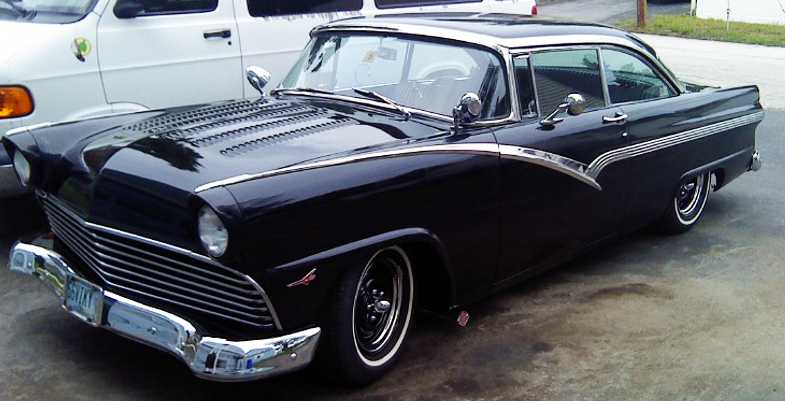 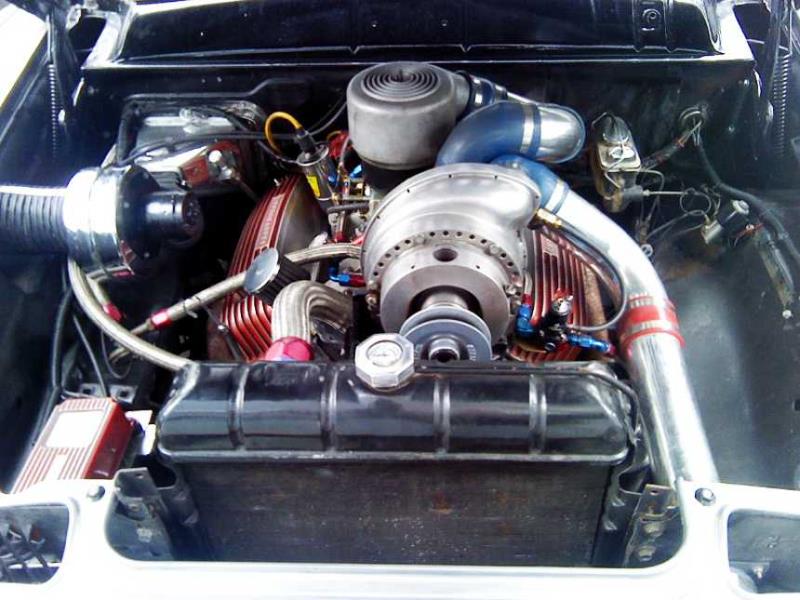
MoonShadow, 292 w/McCulloch, 28 Chrysler Roadster, 354 Hemi)
Manchester, New Hampshire
|
|
|
|
|
55blacktie
|
|
|
Group: Forum Members
Last Active: 2 days ago
Posts: 1.4K,
Visits: 2.0K
|
Litshoot (7/2/2026)
While not enough time/access to work on my car i deep dive into theory to try to understand, been looking at camshafts and have a decent idea of the timing events and spec and what they do. dynamic vs static compression, overlap etc im still completely lost when it comes to power band. Ive been looking at Oregon cams and they dont provide that spec. so comparing other brands advertised information it seems to come down to witchcraft. comparing similar cams with 108° lsa, advertised lift less than .017", but powerbands jump around. looking at the isky 505 3.5-7k has 2°less advertised duration than y-292-s (2.8-6.5k) but 14° more duration at .050. add the y-302-i 3-6.8k with 1° less than the isky. That looks like isky quicker ramp rate gives more area under the curve so that dictates the powerband. But y-284-s has 14° less duration, with a higher broader powerband than isky 301300. I assume there's too many variables. Is it witchcraft until tested with a specific application? when comparing cams does a slower ramp rate help driveability while still giving some idle chop. Seth I like to think of it as more of a science than "witchcraft", but I understand what you're saying. It would be helpful to know what kind of performance you're looking for. Engine displacement, gearing, automatic vs. manual transmission, vehicle weight, all of these things should be taken into consideration when selecting a camshaft. I don't think that advertised rpm range for a particular camshaft is particularly helpful because it doesn't take into consideration all of the above. Someone who owns an identical vehicle might say he loves or hates his camshaft (more likely to say "love", rather than admit that the wrong cam was selected), but you might not agree. I will add that Ford's 57 cam, used in all Y-block C, D, and E Codes had/has 208 degrees duration @ .050 and 113 LSA. One member of this forum installed an Isky 30133 (RPM 300) cam that has 228 duration @ .050 with 112 LSA, and he said that he would have preferred a smaller cam that makes power below 2500 rpm. Isky's advertised rpm range for that cam is 2500-5500. Some people only care about the sound; they want a lopey idle. Some will install the biggest cam available, only to find that it runs like crap. You have to consider if your heads, intake, exhaust, and compression will work with the cam you select. Finally, in my opinion, there is no do-all camshaft; but some are easier to live with than others.
|
|
|
|
|
Litshoot
|
|
|
Group: Forum Members
Last Active: 2 hours ago
Posts: 67,
Visits: 699
|
Im mostly looking in theory to try to understand when rpm band isnt listed without needing to bother the professionals, i will check before purchaseing. The build i making is more show than go. im trying to mimic an old gasser, rough idle, quick revving, lightweight driveline. 1st gear is 3.5 so if i can keep near comparable power to the 70 year old low compression stock 292 its replacing im happy. the y-292-s or rpm300 are interesting. its going to be matched with a set of mild ported g heads, low or high lift rockers and potentially a supercharger.
Seth
|
|
|
|
|
55blacktie
|
|
|
Group: Forum Members
Last Active: 2 days ago
Posts: 1.4K,
Visits: 2.0K
|
Litshoot (7/3/2026)
Im mostly looking in theory to try to understand when rpm band isnt listed without needing to bother the professionals, i will check before purchaseing. The build i making is more show than go. im trying to mimic an old gasser, rough idle, quick revving, lightweight driveline. 1st gear is 3.5 so if i can keep near comparable power to the 70 year old low compression stock 292 its replacing im happy. the y-292-s or rpm300 are interesting. its going to be matched with a set of mild ported g heads, low or high lift rockers and potentially a supercharger. Seth Isky's RPM 300, with 112 LSA, isn't going to give you the rough idle that you're looking for. If you're looking for "comparable power to the old low compression 292", why are you considering a supercharger? For camshafts, an Isky 301444 (E4) with an even tighter Lobe Separation Angle (LSA) than the advertised 108, might come closer to having the "rough idle" you want. Keep in mind that the tighter LSA will provide less vacuum at/near idle, In case you have power brakes.
|
|
|
|
|
Ted
|
|
|
Group: Administrators
Last Active: Yesterday
Posts: 7.6K,
Visits: 206.0K
|
As Jeff brings up, it’s not witchcraft. What works for camshaft design for one family of engines does not necessarily work for another. An expert on a particular engine family will have a much better understanding for what a camshaft for a given family of engines will prefer in the way of duration, lift, and lobe centerlines for a given application. The power band can be made wider/narrower or moved lower/higher in the rpm range by altering the duration and lobe centerline values.
As a general rule, narrowing the lobe centerline value can make the torque value higher but more peakish in that it comes in later and leaves earlier. Just the opposite occurs when the lobe centerline is widened in that the torque comes in earlier and leaves later but does not have that peak value you see with the narrower lobe centerline value. The average torque in both scenarios for a given rpm range still remains the same but is simply spread out more with the wider lobe centerline value. And then the lift value comes into play as more open valve exposure and duration aids cylinder fill which in turn can make for more power when done properly but typically at a higher rpm.
The Engine Masters Challenge Ford Y-Block engine that produced over 600HP did so using a camshaft that was ground on 101° lobe centers but was installed at 98° intake lobe centerline (3° advanced). By capitalizing on the peak torque value this was producing, it scored very well due to the scoring format favoring the torque numbers over the horsepower numbers.
  Lorena, Texas (South of Waco) Lorena, Texas (South of Waco)
|
|
|
|
|
KULTULZ
|
|
|
Group: Forum Members
Last Active: Yesterday
Posts: 2.0K,
Visits: 306.6K
|
How about advice for the average rebuild for a restoration (whereas all must appear OEM) or just a mild street version not requiring high-winding RPM's? Just a mild bump-stick with valve-train improvements for a driver or mild street use? The cam designs have progressed immensely from the fifties.
____________________________
|
|
|
|
|
55blacktie
|
|
|
Group: Forum Members
Last Active: 2 days ago
Posts: 1.4K,
Visits: 2.0K
|
Year & model?
|
|
|
|
|
Ted
|
|
|
Group: Administrators
Last Active: Yesterday
Posts: 7.6K,
Visits: 206.0K
|
KULTULZ (7/4/2026)
How about advice for the average rebuild for a restoration (whereas all must appear OEM) or just a mild street version not requiring high-winding RPM's?
Just a mild bump-stick with valve-train improvements for a driver or mild street use?
The cam designs have progressed immensely from the fifties.For a near stock camshaft, anything that resembles the 1957 Ford camshaft that was installed in the 272, 292, and 312 engines is a good choice. For these, I use the Isky S-969 grind which has slightly more lift and a single degree less lobe centerline. These are worth ~10-15 HP over the stock camshaft in your typical iron headed engine and will still work with the Ford automatic transmission. If wanting just a little bit more rump in the idle, then have it ground on 110° lobe centers but does make it less suitable for a stock automatic transmission. Here are some particulars on that Isky grind. Camshaft: Iskenderian 301-S-969 custom, solid tappet cam
Adv duration: 242°I / 242°E
Lobe lift: 0.285”I / 0.285”E
Valve lift: 0.408”I / 0.408E before valve adjustment w/1.43:1 rockers
Valve lift: 0.439”I/0.439”E before valve adjustment w/1.54:1 rockers
Valve lift: 0.456”I/0.456”E before valve adjustment w/1.6:1 rockers
Lobe centers: 112°
Duration @ 0.050”: 208°I / 208°E
Valve lash: 0.019” Int, 0.019" Exh, Hot
Camshaft is installed at 107° intake lobe centerline (5° advanced) with new chain/gears
Lorena, Texas (South of Waco)
|
|
|
|
|
cos
|
|
|
Group: Forum Members
Last Active: 3 hours ago
Posts: 205,
Visits: 119.9K
|
Hello I have had good results with the ford stock EDB hi lift (.290) blower cam. Ford mentions in supercharged manual that two different cams were used , only used EDB hi lift.. Back in early 60s local Ford YB guys could buy them over the counter for around $18. Oregon cams in Washington State claims to have a original one to pattern a regrind from. Been a few years but cost around $100 if you have a good core. I have a supercharger cam I bought in early 60s but never had timing events checked but lift is .290.
|
|
|
|