|
Group: Forum Members
Last Active: 2 days ago
Posts: 2.0K,
Visits: 306.6K
|
TWO THINGS - For updated BENDIX LINKAGE POWER STEERING, the GRANADA UPDATE was popular at one time years ago - IF the 1957-1959 K-H PEDAL ASSIST SYSTEM could be retrofitted to a 1954-56 chassis, the actual booster wold not be mounted on the firewall. Too old and broken down to try it - 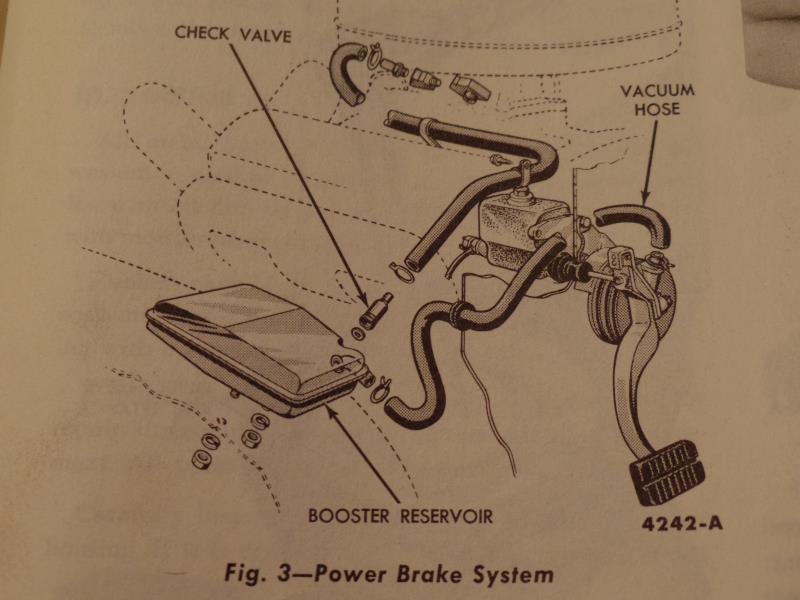 This system is for DRUM/DRUM only as it does not produce enough line pressure for DISC/DRUM.
Improving handling is not that difficult (or cheap) and can be enhanced with differing levels of modification(s).
Mid-year 1955 and 1956 had more than adequate drum brakes to bring one down (IMO) . It involves quality service parts and modification(s).
FATMAN FABRICATIONS offered an updated 1956 frame that allowed the use of performance suspension(s), He is now closed.
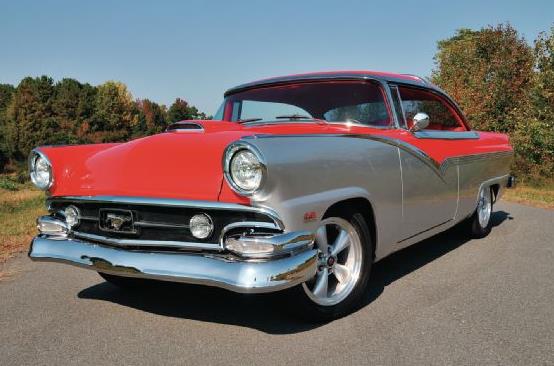
So don't think the car (1954-1956) cannot be improved on. It can be resto-modded and if done tastefully, no one would be the wiser.
 Of course, the above is IMO.
____________________________
|
|
Group: Forum Members
Last Active: Yesterday
Posts: 385,
Visits: 6.2K
|
I am with Cokefirst. Our old cars do not have to be "museum pieces or hanger queens" but are very driveable and safe when well maintained and driven sensibly . I have never had a brake failure in the 40+ years driving my 50's cars. I drive all of my cars locally on short hops around town which gives me great pleasure. I drove my "bone stock" '54 Skyliner from SoCal to Tucson in the Summer heat and another time from SoCal to Vegas also in Summer with no problems. I agree that if you intend to use these cars as a daily driver then there is good cause to update various systems. But for the way that I believe most of us drive our cars, these 50's cars are very driveable and are not " museum pieces or hanger queens".
|
|
Group: Forum Members
Last Active: Last Month
Posts: 168,
Visits: 2.4K
|
[/quote] Although I'm paraphrasing, I agree that there is nothing that these old vehicles can do as well as a new one, with the possible exception of looking good. On the other hand, I don't want to own a vehicle that can't be driven; therefore, I'm all in favor of making them safer and more reliable drivers, not museum exhibits or trailer queens. [/quote] I applaud you for doing what makes you comfortable. I drive my cars (with the exception of the AA) on the freeway at 70 MPH. I do not trailer them nor do they sit in the garage. I drive the cars, although much less than my modern car. I read the comments and it seems that some feel that if you don't have 4 wheel disk brakes, a front suspension off a modern car, and lots of other modification that the car is not safe on the road. If you feel the need to do such things, please go ahead, it is your car. My point is that having driven since the mid 60's and with any vehicle you drive, you have to drive them as they were designed. I am not afraid to drive a car with a single master cylinder, not do I feel that drum brakes are a must.
|
|
Group: Forum Members
Last Active: Last Month
Posts: 1.7K,
Visits: 340.1K
|
I installed Wilwood front discs with their 7/8” MC and prop valve. The rear end has been upgraded with an Explorer 8.8 with F-150 drum brakes. I changed the wheel cylinders to a smaller diameter because they were from a PS truck. I changed the brake pedal ratio by drilling a new hole above the original on the pedal arm. The car stops are great and I see no reason for a vacuum power assist. I have seen many T-bird with front discs and a Midland or Bendix fender booster on the front wheel section of the MC they used. Many were very pleased. Prestige Thunderbird in SoCal has done many of the installations.
56 Vic, B'Ville 200 MPH Club Member, So Cal.
|
|
Group: Forum Members
Last Active: 8 days ago
Posts: 1.4K,
Visits: 2.0K
|
All 55-57 Tbirds & 55-56 full-size used the same 1-inch master cylinder for both manual & power-assist applications. Wilwood & "Dave" of Drop 'em, Stop 'em both recommended a 15/16ths master cylinder for my 55 Tbird with manual brakes. A smaller piston will increase pressure but reduce volume; a larger piston has the opposite effect. I retained the rear drums. I was not impressed with the brake performance after installing rear disc brakes on my 1988 Mustang 5.0. I suppose they would have helped with brake fade when road racing or doing a lot of mountain driving, but I did neither. 80% of your stopping power is up front (unless you have a tendency to drive in reverse a lot); for that reason, I saw no need to install disc brakes on the rear of my Tbird (no need for bragging rights).
|