|
Author
|
Message
|
|
59FE258Y
|
|
|
Group: Forum Members
Last Active: 6 Years Ago
Posts: 20,
Visits: 245
|
Thank you for the information, it's very helpful in making a wise decision. I'm going to check out fan options and I just ordered a 7 psi cap.
|
|
|
|
|
Gene Purser
|
|
|
Group: Forum Members
Last Active: 4 Years Ago
Posts: 220,
Visits: 6.0K
|
59FE258Y (6/19/2019)
My 58 292 runs hot in any kind of warmer weather or traffic. In reading this post, I'm going to go with the Auto City Classic, $200.00, 1957-1959 Ford / Mercury V-8 Aluminum Radiator R5759B. Would you all recommend an electric fan or even ACC's radiator, fan and fan shroud option for $299.00. Thanks for your time and knowledge, I appreciate it. I wrote and asked them the CFM or amps of their fan, it s been a week or so and no reply. It is pretty well understood that a fan should pull 20+ amps on 12v to be really effective. I'm concerned their fan isn't the best, especially at the cost they are offering it with the shroud. I would use a highly rated Spal or a Cooling Component product, both are proven but cost more.
|
|
|
|
|
DryLakesRacer
|
|
|
Group: Forum Members
Last Active: Last Month
Posts: 1.7K,
Visits: 340.1K
|
I bought a US 7 years ago and never had a problem. It's 3 row but not the one with the most fins. I had a trans cooler added to the bottom. I too run a 7 psi cap and leave the coolant 1" down with no recovery tank.
56 Vic, B'Ville 200 MPH Club Member, So Cal.
|
|
|
|
|
59FE258Y
|
|
|
Group: Forum Members
Last Active: 6 Years Ago
Posts: 20,
Visits: 245
|
My 58 292 runs hot in any kind of warmer weather or traffic. In reading this post, I'm going to go with the Auto City Classic, $200.00, 1957-1959 Ford / Mercury V-8 Aluminum Radiator R5759B. Would you all recommend an electric fan or even ACC's radiator, fan and fan shroud option for $299.00. Thanks for your time and knowledge, I appreciate it.
|
|
|
|
|
Gene Purser
|
|
|
Group: Forum Members
Last Active: 4 Years Ago
Posts: 220,
Visits: 6.0K
|
I know this is an older thread, but I want to add something about the Auto City radiator. Although I am not an engineer or otherwise an authority on the subject, over the years I have done a good bit of reading on radiators. There are a lot of variables that influence cooling in a radiator. I was looking on ebay at radiators and saw the Auto City radiator for the mid-fifties Fords have two rows of 1 1/8" tubes. This is significant because (1) the heat is taken away from the tubes by the fins. The fins are attached to the flat sides of the tubes. A wider tube has more area of fin attachment than more rows of more narrow tubes. (2) A larger tube flows more than multiple smaller tubes of the same total width.
Griffin Radiator has even wider tubes available. I had a Griffin radiator with the 1 1/4" tubes in my 40 Ford. It ran so cool the electric fan only came on after much slow/stop-start driving. Griffin might cool better than this one, but it cost 3-4 times more.
I am not connected with Auto City, and I don't own one of the radiators, but if I need one they will be the first I check out.
|
|
|
|
|
bergmanj
|
|
|
Group: Forum Members
Last Active: Last Year
Posts: 257,
Visits: 3.9K
|
Charlie,
Any paint is good; oil-based is best: Again, any color. And White is best for reflecting external heat away, whereas black will also absorb external heat best while still dissipating internal heat as well as white. Gloss is best at reflecting external heat, and flat is best at absorbtion of external heat. So: Gloss white is best at radiating heat while rejecting external heat absorbtion; and, flat Black is equally as good at radiating heat; but, worst at rejecting external heat. It should be obvious that all other shades/brightnesses/finishes would fall somewhere in between.
As for "differences" between radiators and electrical/electronics heatsinks, there isn't any: Heat is heat, physics is physics; and, air moving by removes just as well on either for equal exposed surface areas, turbulence, and total air flows: ALL other things being equal, painted metal will do much better (~95% range) versus "plain" metal (~65% range); and, polished metal is by far the worst (again, which is why pressure cookers are polished, for example).
Everybody's very welcome to doubt any free information given here - whether it has good research behind it or not; check out the reference (General Electric SCR Manual, specifically it's 4th edition [5th edition does not have this information]), though, before doubting G. E.'s substantial research.
Simply trying to be helpful; use or don't as you see fit.
Regards, JLB
55 Ford Crown Victoria Steel Top
|
|
|
|
|
57RancheroJim
|
|
|
Group: Forum Members
Last Active: Last Year
Posts: 729,
Visits: 112.0K
|
I'm not sure I agree with this. It may work for electronics but everything I researched about aluminum radiators before I bought one says Not to paint them. For a show car it would be alright but not for a driver.
|
|
|
|
|
charliemccraney
|
|
|
Group: Moderators
Last Active: Yesterday
Posts: 6.1K,
Visits: 443.0K
|
Is it a specific type of paint that was used in the research or does any paint work?
Lawrenceville, GA
|
|
|
|
|
oldcarmark
|
|
|
Group: Forum Members
Last Active: 10 days ago
Posts: 3.7K,
Visits: 32.6K
|
bergmanj (4/14/2019)
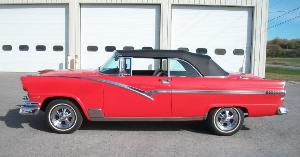
Oldcarmark, Actually (from research studies done by General Electric back in the 1960's for use with heat sinks for their Silicon Controlled Rectifiers - to get rid of damaging heat), a painted heat sink [read that "radiator"] dissipates heat much better than plain unpainted metal ["emissivity" for neat, unpolished-but-clean, metal is in the 65% range - doesn't matter what color of unfinished clean metal (though "dull" is much better than "polished" metal - which is why pressure cookers are polished - keeps the heat "in"), whereas painted is in the 95% range - again, no difference between different colors]. Seems counter-intuitive; but, this information is from good research (G.E. SCR Manual 4th edition - C. A. 1960's). Percentages are relative to a "theoretically perfect Black Body" as a 100% reference for ability to radiate heat (ask your friendly local physicist). Retired now; but, dealt with this "heat dissipation" issue many times over my 45-year career in electrical/electronics work. Hope this is helpful to more than just you. Regards, JLB Interesting Information. I would never have thought painted would dissipate Heat better than Bare Finish. I see quite a few Aluminum Rads in use at the Shows. I guess some don't Paint them thinking the same thing I did. Looks much more Original painted. One thing that my Buddy mentioned is that I should have used Vinegar as a Prep at least on the Top Tank before Painting. The Bar B Q Paint does not require Primer bur treating the Aluminum before Painting is better for Adhesion. I purchased One Rad from Champion for my last 56 and the One I have now from Auto City Classic. Between the 2 the One from Auto City appears to be better Quality and the Top Tank looks more like the Original if Anyone wants an Opinion between the 2. Both purchased on Ebay.
|
|
|
|
|
bergmanj
|
|
|
Group: Forum Members
Last Active: Last Year
Posts: 257,
Visits: 3.9K
|
Oldcarmark,
Actually (from research studies done by General Electric back in the 1960's for use with heat sinks for their Silicon Controlled Rectifiers - to get rid of damaging heat), a painted heat sink [read that "radiator"] dissipates heat much better than plain unpainted metal ["emissivity" for neat, unpolished-but-clean, metal is in the 65% range - doesn't matter what color of unfinished clean metal (though "dull" is much better than "polished" metal - which is why pressure cookers are polished - keeps the heat "in"), whereas painted is in the 95% range - again, no difference between different colors]. Seems counter-intuitive; but, this information is from good research (G.E. SCR Manual 4th edition - C. A. 1960's). Percentages are relative to a "theoretically perfect Black Body" as a 100% reference for ability to radiate heat (ask your friendly local physicist).
Retired now; but, dealt with this "heat dissipation" issue many times over my 45-year career in electrical/electronics work.
Hope this is helpful to more than just you.
Regards, JLB
55 Ford Crown Victoria Steel Top
|
|
|
|