|
Author
|
Message
|
|
oldcarmark
|
|
|
Group: Forum Members
Last Active: 2 days ago
Posts: 3.8K,
Visits: 33.4K
|
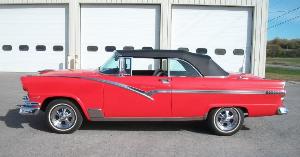
Trying to help a fellow Y-Blocker convert his stock 55 272 2 BBL to 4 BBL. Sold Him a B Manifold. Needs carb and Distributor. Is 600 CFM too big for this application? I have a 390 on mine but Prices for new ones are ridiculous now. Bought mine 8 Years ago at about 1./2 the price they are now.
|
|
|
|
|
55blacktie
|
|
|
Group: Forum Members
Last Active: Yesterday
Posts: 1.4K,
Visits: 2.0K
|
oldcarmark (11/9/2026)
Trying to help a fellow Y-Blocker convert his stock 55 272 2 BBL to 4 BBL. Sold Him a B Manifold. Needs carb and Distributor. Is 600 CFM too big for this application? I have a 390 on mine but Prices for new ones are ridiculous now. Bought mine 8 Years ago at about 1./2 the price they are now. If the 272 otherwise is stock, the owner should take a look at what factory-refurbished carburetors are available on Holley's website.There is a Slayer Series 450 cfm carburetor with vacuum secondaries that is considerably cheaper than the 390 cfm carburetor. Like the 390, it's a 4160 carburetor with a single fuel inlet. A factory-refurbished 450 cfm Slayer carburetor lists for $320.95, with free shipping. There isn't one currently available, but your friend can request email notification when one is available. The factory-refurbished carburetors come with the same warranty as new and include the same accessories for installation. The carburetors are inspected and repaired (when needed) before leaving Holley. Often the carburetors are returned, even though there is nothing wrong with them. I bought a factory-refurbished Holley Street Avenger 570 carburetor (the same carburetor that Ford Performance uses on its 347 SBF crate engine), but my engine won't be stock. Although the refurbished carburetors are sold on eBay, I bought mine directly from Holley. As I recall, I don't think I had to pay sales tax or shipping. A 4-barrel carburetor with the same cfm rating as a 2-barrel will have smaller primaries; it will be more responsive at low rpm and returns better mpg under normal driving. I have a friend with a 55 Tbird who needed a new carburetor. He replaced a Holley Street Avenger 570 carburetor with a Holley 8007 390 cfm carburetor. Although he said that the 570 was a good carburetor, he is very happy with the 390 for the same reasons that I mentioned.
|
|
|
|
|
oldcarmark
|
|
|
Group: Forum Members
Last Active: 2 days ago
Posts: 3.8K,
Visits: 33.4K
|
Good Information. I have a 390 on mine and never had a problem. Very happy with it. only modification I made was to replace Inlet Needles with Ones for alcohol. All steel so no stuck inlet problems. Factory Ones are rubber tipped.
|
|
|
|
|
Ted
|
|
|
Group: Administrators
Last Active: Yesterday
Posts: 7.6K,
Visits: 206.1K
|
For a stock Ford Y, a 600 cfm vacuum secondary carburetor will work just fine. The primary side of the carb is still basically the same size as many of the later model two barrel carbs and because the secondary side of the carburetor is demand driven by the air flow in the primaries, the secondary side will only open the amount required by the engine. Said differently, just because the vacuum secondary carb is rated at 600 cfm does not mean the engine is going to automatically open the full amount as the secondary side will only open just enough to supply what the engine wants as dictated by the primary side air flow. If you start changing the secondary springs to lighter tension springs, then there is the possibility of the secondaries opening both earlier and more than the engine is requiring for a given rpm band. For most Y’s with an improved or upgraded camshaft and the larger 1.92” intake valves, then a 750 cfm vacuum secondary carb works just fine.
Here's some more food for thought. Keep in mind that the 1957 Ford V8 engine car lineup all used the same camshaft. This includes the 272, 292, 312 4V, 312 8V, and the 312 supercharged (after the first 100 that were built). It must be noted that all the 1957 292 engines received a 2V carburetor only because of issues in 1956 where a significant number of the 292 engines with a 4V carb were proving to be more powerful than their 312 counterparts. That issue was resolved in 1957 by simply using only a 2V carburetor on the 272 and 292 engines and eliminating the 4V option on those particular engines. There were also some 272 engines equipped with a factory installed 4V carburetor carb in previous years, but those carbs were only rated at ~410 cfm which were the same carbs also available on the 292 and 312 engines during that same era.
  Lorena, Texas (South of Waco)
|
|
|
|
|
Joe-JDC
|
|
|
Group: Forum Members
Last Active: Yesterday
Posts: 798,
Visits: 23.3K
|
Also, you will need a spacer to allow the 600 cfm carb butterflies to open properly on the ECZ-B intake manifold due to the smaller holes in the plenum. Those ledges will not be optimal, and cutting them out to the 600 size should be done on a Bridgeport to avoid the sharp edges under the spacer which could lead to vacuum leaks. If you can get that carb area milled down flat like Ted does then that is best. Joe-JDC 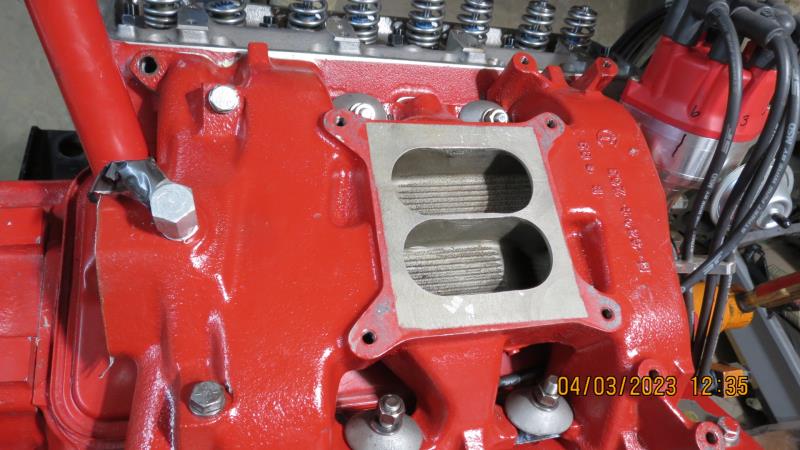 JDC
|
|
|
|
|
oldcarmark
|
|
|
Group: Forum Members
Last Active: 2 days ago
Posts: 3.8K,
Visits: 33.4K
|
Thanks for the Information Ted. So it sounds like the "B" Manifold was only used on the 312 Engines?
|
|
|
|
|
55blacktie
|
|
|
Group: Forum Members
Last Active: Yesterday
Posts: 1.4K,
Visits: 2.0K
|
oldcarmark (11/12/2026)
Thanks for the Information Ted. So it sounds like the "B" Manifold was only used on the 312 Engines? There were heavy-duty trucks that were equipped with 292 engines with 4-barrel carburetors; the rest were 312s. The last of the 312 Mercurys were equipped with a 2-barrel, as were 57-up 292s, with the aforementioned exception.
|
|
|
|
|
Ted
|
|
|
Group: Administrators
Last Active: Yesterday
Posts: 7.6K,
Visits: 206.1K
|
oldcarmark (11/12/2026)
Thanks for the Information Ted. So it sounds like the "B" Manifold was only used on the 312 Engines?Adding to what Jeff says about the ECZ-B 4V intake manifolds, they were available all way through 1964 on the HD 292 engines in the bigger trucks. F100 and F250 trucks with the 292 engines were only available with a 2V carburetor.
Lorena, Texas (South of Waco)
|
|
|
|
|
DryLakesRacer
|
|
|
Group: Forum Members
Last Active: Yesterday
Posts: 1.7K,
Visits: 340.1K
|
+There are many favorable threads on how well the the Summit 500 works on the Yblock right of the box and better with some garage tuning. I see here it was not mentioned. If I every remove my 2 WCFB's I have one ready to install on a Blue Thunder manifold.
56 Vic, B'Ville 200 MPH Club Member, So Cal.
|
|
|
|
|
55blacktie
|
|
|
Group: Forum Members
Last Active: Yesterday
Posts: 1.4K,
Visits: 2.0K
|
Ted Eaton likes the Summit carburetors. Apparently they are made by Holley for Summit, but I don't know where they are made; for a stock engine, I see no need for anything larger than their 500 cfm carburetor.
I visited Tim McMaster yesterday. Tim recently took an engine to Ted for dyno testing. For performance applications, both Ted and Tim seem to be sold on 750 cfm carburetors, and vacuum secondaries for street applications.
|
|
|
|