|
By Hoosier Hurricane - 9 Months Ago
|
|
This morning on my internet headlines is posted an ad on Walmart's notice is aluminum intake for Y-Blocks for $210. Sounds too good to be true, ECZ-B manifold price range. I have no connection with this ad, just posting a notice.
|
|
By 55blacktie - 9 Months Ago
|
|
Daniel Jessup (hotrodreverend.com) evaluated the TSP aluminum intake manifold. Is a third-party vendor selling the manifold on Walmart.com?
|
|
By Big Tim - 9 Months Ago
|
Heres the company:
https://topstreetperformance.com/products/1955-1957-ford-thunderbird-4-barrel-4v-aluminum-intake-manifold-ecb-9425-b-272-292-312-satin?srsltid=AfmBOorUiLeJK8DjsNfhmaLS9fYP8-Pm-8PtDFVTDQewsVEs9fSWMc-6
I've bought a couple of them to have on hand. Its basically a direct copy of a B manifold but half the weight and typically, almost half the price.
Free shipping and use "WELCOME10" for 10% off your order.
Mr. Jessup did a nice write up on his YouTube channel. Theres a little port mismatch but nothing that I personally would be concerned with on a street car, barring a vac leak. A little enlarging of a gasket bolt hole would alleviate any anxiety on that front I would think. I don't know if anyone has actually installed one on a car yet as of this moment.
https://www.youtube.com/watch?v=fywiDDVKVhg
|
|
By Blind Willie - 9 Months Ago
|
I just bought one direct from TSP for $189, free shipping. I used the 10% off WELCOME10 code.
Link to the Reverend’s write up:
https://www.hotrodreverend.com/post/brand-new-1957-four-barrel-aluminum-intake-manifold-for-the-y-block
Ted also weighed in last year about this manifold:
http://forums.y-blocksforever.com/Topic169098.aspx
Link to TSP:
https://topstreetperformance.com/products/1955-1957-ford-thunderbird-4-barrel-4v-aluminum-intake-manifold-ecb-9425-b-272-292-312-satin?_pos=2&_sid=6faa32b74&_ss=r&_fid=a41d89132
|
|
By 55blacktie - 9 Months Ago
|
|
Someone who recently purchased a TSP manifold posted on Facebook's Y-block Group. He was under the impression that someone was careless during manufacturing and drilled unnecessary holes in it. He said that he was going to use J-B Weld High-Temp Putty to fill the holes. Based on his photos, I concluded that the holes were deliberately drilled to accommodate the heat-riser tube that passes through the manifold and would have the mushroom cap on the passenger side. Does the TSP manifold include the tube?
|
|
By Blind Willie - 9 Months Ago
|
|
The Hot Rod Reverend did a video, which is a bit painful to watch, and he notes the absence of holes for the heat tube. Maybe the seller on FB tried to add one and then sold it.
|
|
By Ted - 9 Months Ago
|
The Top Street Performance (TSP) intake manifold is the twin to the Mercury 8 Restorations (M8R) manifold and I’ve had both in the shop. Neither of these manifolds were machined for the factory heat tube to accommodate the 1957/1958 automatic choke but not a big deal for that as Ford discontinued that particular heat path and in 1959 went instead to the right-side exhaust manifold for the heat source for the choke. In most modern intake/carb conversions, the electric choke is the method of choice for the automatic choke which removes having a heat source at either the intake manifold or exhaust manifold.
In both the M8R and TSP manifolds, I found no additional holes, threaded or otherwise, that were not already in the factory ECZ-B manifolds excluding the drilled choke passage that went from one side of the ECZ-B manifold and to the other. In running the M8R manifold on the dyno mule, it made the same power numbers as the factory ECZ-B intake manifold so it was a very good reproduction of the factory manifold.
Here's the link to some additional information posted last year on this site regarding the M8R manifold. Doing a search will find some more.
http://forums.y-blocksforever.com/FindPost168994.aspx
|
|
By DANIEL TINDER - 9 Months Ago
|
Blind Willie (1/25/2026)
The Hot Rod Reverend did a video, which is a bit painful to watch, and he notes the absence of holes for the heat tube. Maybe the seller on FB tried to add one and then sold it.
Ted,
I notice the data sheet included with elect. choke Holley carbs. specifies 12V as a mandatory minimum. Just curious if you have experimented with supplying one with 6V only (?). Would the choke possibly thus still fully open, though more slowly? Or, would I need a transformer for sure?
|
|
By alanfreeman - 9 Months Ago
|
|
Daniel....all of my cars are still 6 volt positive ground. One of them has a more "modern" Holley 4 bbl carburetor with an electric choke obviously designed to run on 12 volts. I too, doubted that the electric choke would work on 6 volts but it does open which surprised me so I have left it alone.
|
|
By KULTULZ - 9 Months Ago
|
|
INQUIRE HERE - https://www.carbsonly.com/Graphics/BigPicks/electrcichoke7v.htm
|
|
By Ted - 9 Months Ago
|
|
DANIEL TINDER (1/26/2026)
Ted,
I notice the data sheet included with elect. choke Holley carbs. specifies 12V as a mandatory minimum. Just curious if you have experimented with supplying one with 6V only (?). Would the choke possibly thus still fully open, though more slowly? Or, would I need a transformer for sure?
While I have not experimented directly in putting 6 volts to a 12 volt choke coil, I have seen instances where the choke was hooked to the positive side of the coil on 12-volt systems. While the choke did work, the drop in voltage to the ignition was a problem which is where I become involved as the cars are either hard starting or experience a misfire at speed. Part of that warning about using a minimum of 12 volts is to eliminate installers from using the positive coil connection for the voltage supply.
If hooking up a twelve volt choke coil to a direct six volt source (ignition switch), there’s no doubt in my mind that 6 volts would simply have the choke coil open more slowly but would still open fully. On the flip side of this, there are lower voltage electric choke coils available which would speed up the choke operation in lieu of using a 12 volt choke coil. Considering how fast the electric choke works when using 12 volts, I suspect using 6 volts on a 12 volt choke coil could potentially work better in that it would slow down the opening of the choke.
|
|
By KULTULZ - 9 Months Ago
|
The electric choke conversion power supply should (IMO )be sourced directly off the BATT via a relay (IGN SW activated) and fused and in no way sourced off the IGN CIRCUIT..
TO WIT - 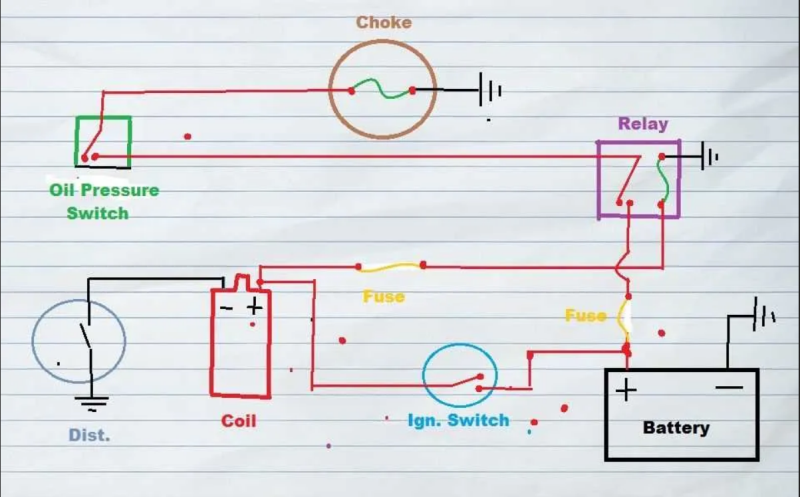
|
|
By DANIEL TINDER - 9 Months Ago
|
KULTULZ (1/27/2026)
The electric choke conversion power supply should (IMO )be sourced directly off the BATT via a relay (IGN SW activated) and fused and in no way sourced off the IGN CIRCUIT.. TO WIT -
Thanks KULTULZ,
Other than polarity reversal (for stock 6V/pos.grd. system), fuse values would be helpful info to correct the diagram (?). Also, I assume the oil pressure idiot light circuit could be skipped, since if the engine dies and points ignition is still long active, continuing current to the relay & choke would be a lesser problem.
|
|
By KULTULZ - 9 Months Ago
|
That is the best schematic I could find ,,,
It also includes a circuit to shut-off the electric choke or an electric fuel pump if the engine shuts off. Just concentrate on the basic install.
I have little experience in 6V so you will have to find wire gauge and fuse values on a wiring site.
Did you call about the 7V cap?
BTW - What CARB are you using (FORD or HOLLEY) and if a take-off does it include the choke housing?
|
|
By alanfreeman - 9 Months Ago
|
|
I have had my 12 volt Holley electric choke wire connected directly to the hot side of my 6 volt coil for many years and have never had any problems.
|
|
By DANIEL TINDER - 9 Months Ago
|
alanfreeman (1/28/2026)
I have had my 12 volt Holley electric choke wire connected directly to the hot side of my 6 volt coil for many years and have never had any problems.
I’ve had trouble in the past when drawing too much aux. current (charging an iPhone while playing music thru the HP jack). The engaged/balky OD system with radio & headlights on also, and motor misses at high rpm. But, I’ll try the coil connection first before going the relay route. My recent gen rebuild & solid state OD relay conversion may make the difference.
|
|
By KULTULZ - 9 Months Ago
|
I’ve had trouble in the past when drawing too much aux. current (charging an iPhone while playing music thru the HPjack). The engaged/balky OD system with radio & headlights on also, and motor misses at high rpm.
But, I’ll try the coil connection first ...
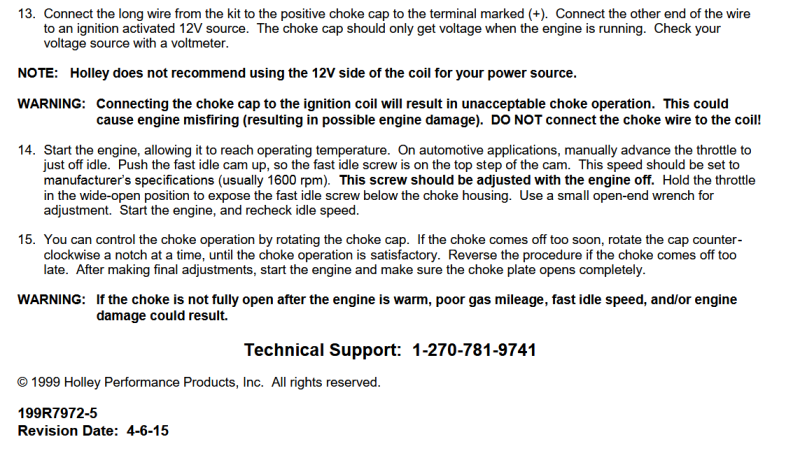 The choke cap should only receive power with engine running. This is the reason for the oil pressure switch cut-out in the above diagram illustration, to prevent any possible power draw to the choke cap with engine off. Same as with an electric fuel pump. It is a safety feature. |
|
By Ted - 9 Months Ago
|
|
The reason you do not use the positive side of the ignition coil as a voltage source for the choke heating coil is that the choke coil will act like a resistor for the ignition circuit. By the choke coil acting as a resistor when hooked to the ignition coil, the voltage will be reduced for both the ignition coil and the choke coil. Just how good your ignition circuit is initially which also includes the spark plug gaps, will determine if the overall performance of the vehicle will be affected if hooking up the choke coil to the positive side of the ignition coil.
|
|
By DANIEL TINDER - 9 Months Ago
|
KULTULZ (1/29/2026)
I’ve had trouble in the past when drawing too much aux. current (charging an iPhone while playing music thru the HPjack). The engaged/balky OD system with radio & headlights on also, and motor misses at high rpm.
But, I’ll try the coil connection first ...
The choke cap should only receive power with engine running. This is the reason for the oil pressure switch cut-out in the above diagram illustration, to prevent any possible power draw to the choke cap with engine off. Same as with an electric fuel pump. It is a safety feature.
I understand why the fuel pump cut-off is a safety feature (in case of collision, etc.). But don’t get why continuing current to the choke would be, other than running down the battery (?) Would it possibly ignite gas fumes? If so, that would make it dangerous in normal usage situations, and thus not a common feature.
|
|
By DANIEL TINDER - 9 Months Ago
|
Ted (1/29/2026)
The reason you do not use the positive side of the ignition coil as a voltage source for the choke heating coil is that the choke coil will act like a resistor for the ignition circuit. By the choke coil acting as a resistor when hooked to the ignition coil, the voltage will be reduced for both the ignition coil and the choke coil. Just how good your ignition circuit is initially which also includes the spark plug gaps, will determine if the overall performance of the vehicle will be affected if hooking up the choke coil to the positive side of the ignition coil.
I assume the same would apply if the connection was anywhere on the same the ignition switch ‘running only’ circuit/pole that powers the coil. Other accessories that only function when the switch is in either ‘acc’ or ‘ign’ positions must have a similar ‘resistor’ effect (including the proposed relay), though in relation to their current draw.
|
|
By KULTULZ - 9 Months Ago
|
"I understand why the fuel pump cut-off is a safety feature (in case of collision, etc.). But don’t get why continuing current to the choke would be, other than running down the battery (?) Would it possibly ignite gas fumes? If so, that would make it dangerous in normal usage situations, and thus not a common feature."
It is a safety feature.
I posted the wrong schematic (the correct one will not upload for whatever reason).
Study the schematic without the oil pressure cut-out switch and that will isolate the coil circuit away from the IGN circuit.
You don't want to overload either circuit running in an older IGN SW/wiring system and you don't want the choke drawing power from the IGN circuit, especially after having gone to electronic ignition.
|
|
By Litshoot - 9 Months Ago
|
i assume the cutoff for choke is just a good safety step. remove a hot wire from a supply of fuel. plus a length of wire that could pinch chaffe short etc.
Seth
|
|
By peglegrice - 6 Months Ago
|
|
I asked one owner if there was any visible differences between it and the Factory.s version. He told me all the ports were the same. Evidently the only difference is its 25-30 pounds lighter.
|
|
By Cliff - 6 Months Ago
|
|
Hi, I sell these after I rework them, the ports are a little smaller and poorly shaped, I repair the ports that need it and I slot the the carburetor base, some I drill for a small Holley pattern, I would not use these manifolds without some kind of inspection and correction, they all need something.
|
|
By 55blacktie - 6 Months Ago
|
peglegrice (4/16/2026)
I asked one owner if there was any visible differences between it and the Factory.s version. He told me all the ports were the same. Evidently the only difference is its 25-30 pounds lighter.
That's funny, considering that the OEM cast-iron intake manifolds weigh 31 pounds. The aluminum intake, according to John Mummert, weighs 14 pounds.Unless you're into serious 1/4-mile racing, I wouldn't be concerned about the weight difference.
|
|
By Litshoot - 6 Months Ago
|
Cliff have you come across core shift that could be problematic, or is it just more metal inside to remove?
Seth
|
|
By Cliff - 6 Months Ago
|
Yes a little, but nothing that I could not fix, most problems is with the rear ports, they get thin at the bolt hole. These manifolds are cheap, they are not better than 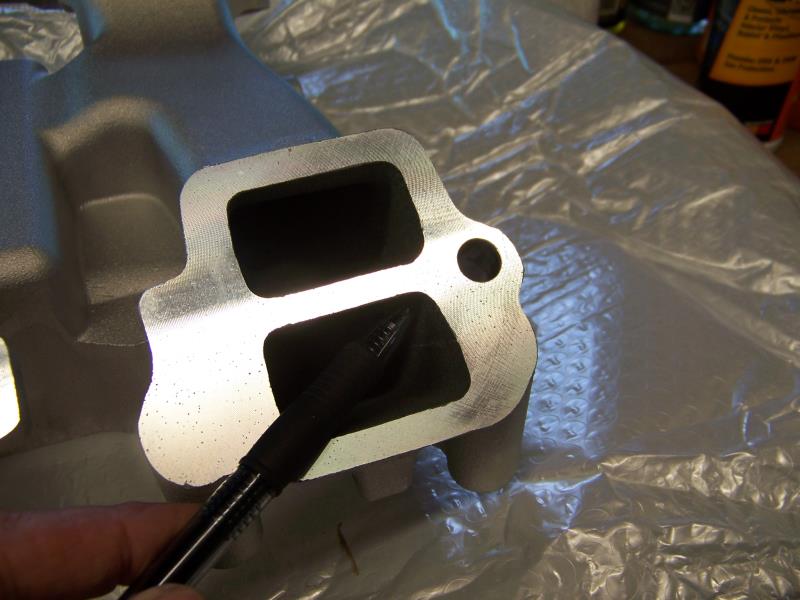 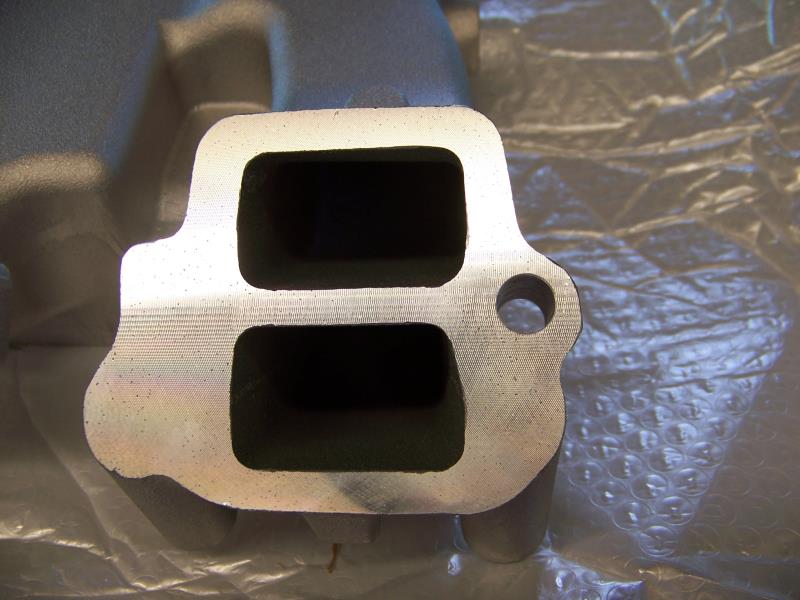 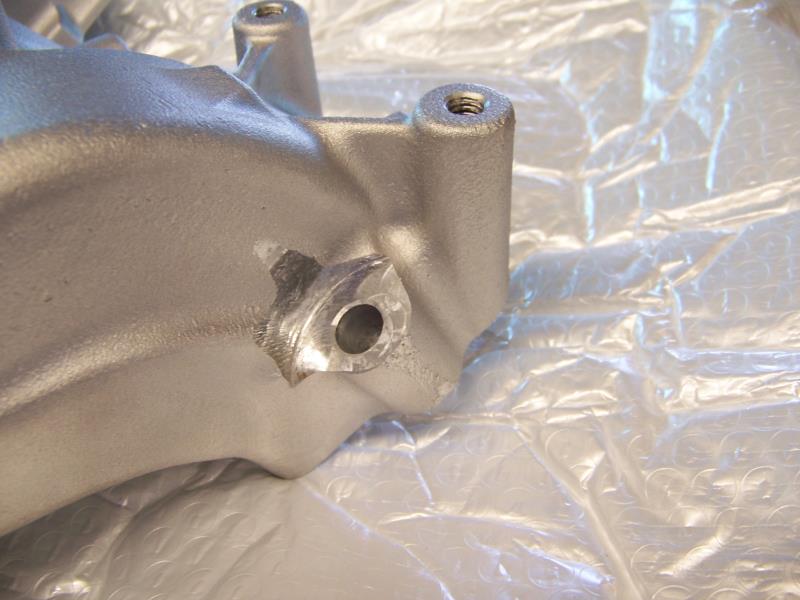 stock, I spend about 1 1/2 hours on each one. stock, I spend about 1 1/2 hours on each one.
|
|
By Joe-JDC - 6 Months Ago
|
I ported my ECZ-B iron intake for testing for the 304CI Y that Ted and I took to EMC. We tested several intakes and 3 sets of heads before finalizing the engine for EMC. The ECZ--B made 437 hp and my ported Mummert dual plane made 454 hp. It took a lot of time, effort to get the ECZ-B to respond to porting but can be made quite good. As cast it only flows ~189 cfm and the new aluminum intake that I flowed for Ted flows ~184 cfm IIRC. Here are a couple of pictures of the ECZ-B after port work. Joe-JDC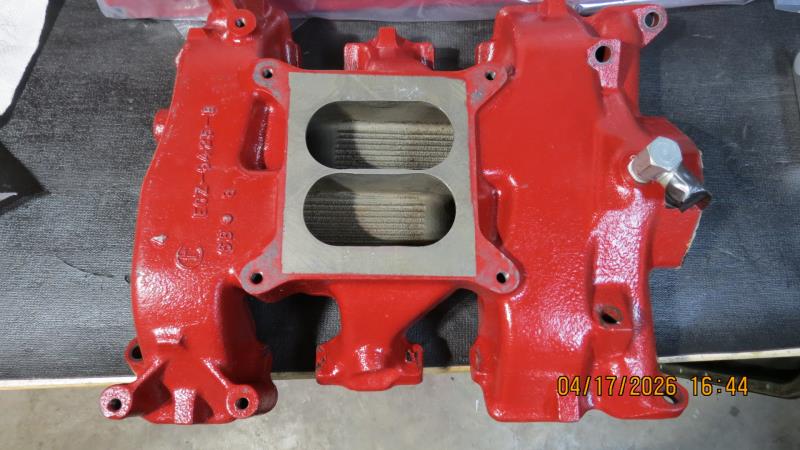 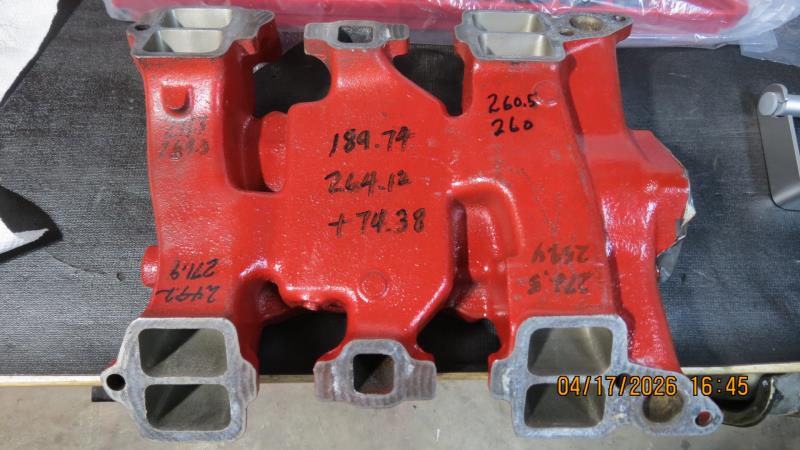
|
|
By Cliff - 6 Months Ago
|
|
Hi Joe, you always do a better job that anyone else can. what flow bench do you use? mine is a JKM 600 (old)
|
|
By 55blacktie - 6 Months Ago
|
Joe-JDC (4/17/2026)
I ported my ECZ-B iron intake for testing for the 304CI Y that Ted and I took to EMC. We tested several intakes and 3 sets of heads before finalizing the engine for EMC. The ECZ--B made 437 hp and my ported Mummert dual plane made 454 hp. It took a lot of time, effort to get the ECZ-B to respond to porting but can be made quite good. As cast it only flows ~189 cfm and the new aluminum intake that I flowed for Ted flows ~184 cfm IIRC. Here are a couple of pictures of the ECZ-B after port work. Joe-JDC
Joe, how much of an improvement have you seen when the ECZ-B intake carburetor base/plenum has been opened up to two ovals, runners blended into the plenum, and removal of any casting flash/irregularities but no extensive porting? Surely you've tested in stages to determine what modifications return the greatest improvement.
Just looking at John Muumert's Y-block Porting chart, the stock ECZ-B intake will outflow stock ECZ-G heads. However, once the heads have been worked on, the stock, non-ported ECZ-B intake could be a restriction.
|
|
By Joe-JDC - 6 Months Ago
|
I use a SF-600 flow bench that I have owned since 1994. I have had it rewired once per Super Flow Technical bulletin, and replaced the motors at least 3 times. It has 8 vacuum motors and they get really hot flowing the exhaust ports if you don't have an airconditioned shop. I keep my shop at 71* year round just for that reason. Removing the four holes and opening up the plenum to dual ovals really allows the fuel/air to turn more quickly into the runners, and there is about 15 cfm gain average. Removing the sharp corners or rounding them as much as possible helps the air turn into the ports better and increases the flow. I usually have to flow an intake at least 5 or 6 times after each rework of the ports to get the flow to balance between runners. Some dual plane intakes make that nearly impossible, but if you take the best flowing port and bring the others up to that one, then the fuel distribution and carburetor jetting is much easier allowing the engine to make best torque and horsepower. I don't know many folks who will take the time to balance the runners to equalize the flow, but I have done it for over 30 years for the hundreds of intakes I have ported for folks. I made my own adapters for each engine family and head port size. Joe-JDC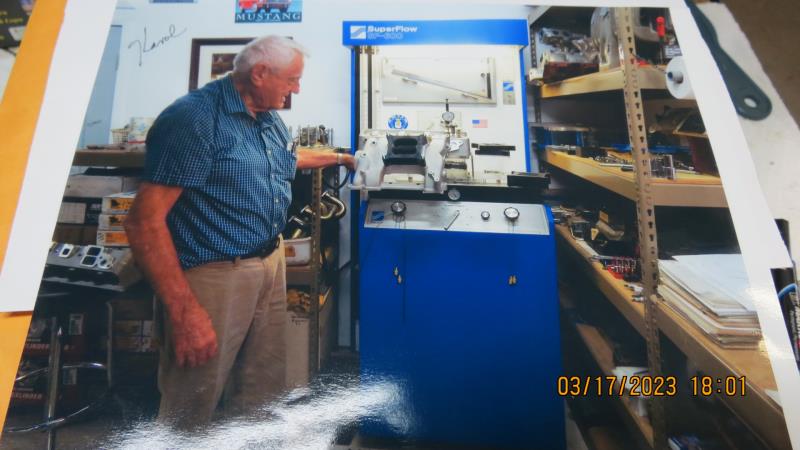
|
|
By 55blacktie - 6 Months Ago
|
Joe-JDC (4/18/2026)
I use a SF-600 flow bench that I have owned since 1994. I have had it rewired once per Super Flow Technical bulletin, and replaced the motors at least 3 times. It has 8 vacuum motors and they get really hot flowing the exhaust ports if you don't have an airconditioned shop. I keep my shop at 71* year round just for that reason. Removing the four holes and opening up the plenum to dual ovals really allows the fuel/air to turn more quickly into the runners, and there is about 15 cfm gain average. Removing the sharp corners or rounding them as much as possible helps the air turn into the ports better and increases the flow. I usually have to flow an intake at least 5 or 6 times after each rework of the ports to get the flow to balance between runners. Some dual plane intakes make that nearly impossible, but if you take the best flowing port and bring the others up to that one, then the fuel distribution and carburetor jetting is much easier allowing the engine to make best torque and horsepower. I don't know many folks who will take the time to balance the runners to equalize the flow, but I have done it for over 30 years for the hundreds of intakes I have ported for folks. I made my own adapters for each engine family and head port size. Joe-JDC
Thanks, Joe. What are the numbers for the out-of-the-box Mummert dual plane? Have you tested both versions (Tbird vs other)? Just wondering how much is lost with the height difference.
|
|
By Joe-JDC - 6 Months Ago
|
There is no difference between the Thunderbird and passenger car intake flow cfm. The manifolds have changed flow a very minor amount over the years but not significant. After porting, the Mummert comes out the best for maximum flow in my experience. I have a couple of the dual plane intakes flowing over 340 cfm average through all 8 ports, and just barely over 330 cfm with the BT. Still Ted made 585 hp with my ported BT on a 375 CI engine in Y block Magazine several years ago. Just typical clean up of the ports will net 300-305 cfm for your average performance build. Here are the BT and Mummert side by side with flow figures as cast. Joe-JDC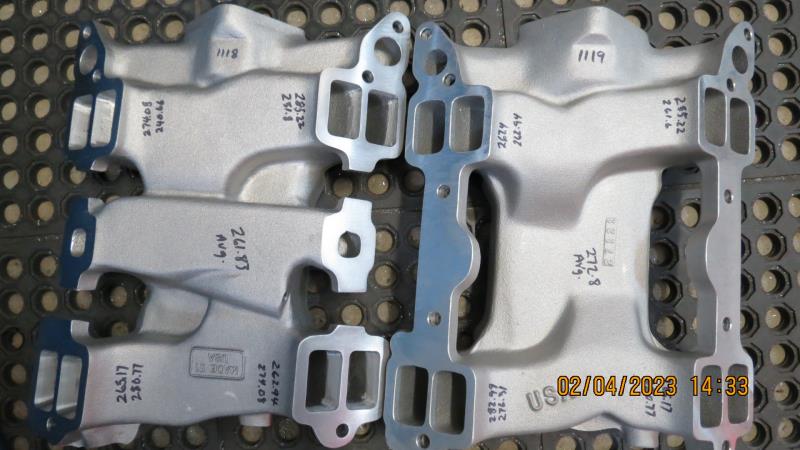 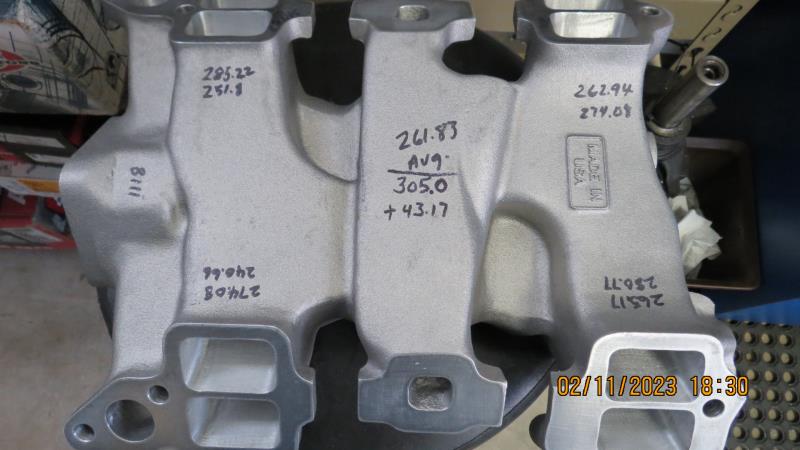
|
|
By 55blacktie - 6 Months Ago
|
Joe-JDC (4/18/2026)
There is no difference between the Thunderbird and passenger car intake flow cfm. The manifolds have changed flow a very minor amount over the years but not significant. After porting, the Mummert comes out the best for maximum flow in my experience. I have a couple of the dual plane intakes flowing over 340 cfm average through all 8 ports, and just barely over 330 cfm with the BT. Still Ted made 585 hp with my ported BT on a 375 CI engine in Y block Magazine several years ago. Just typical clean up of the ports will net 300-305 cfm for your average performance build. Here are the BT and Mummert side by side with flow figures as cast. Joe-JDC
You're the man. Thanks.
|